
Description
Description
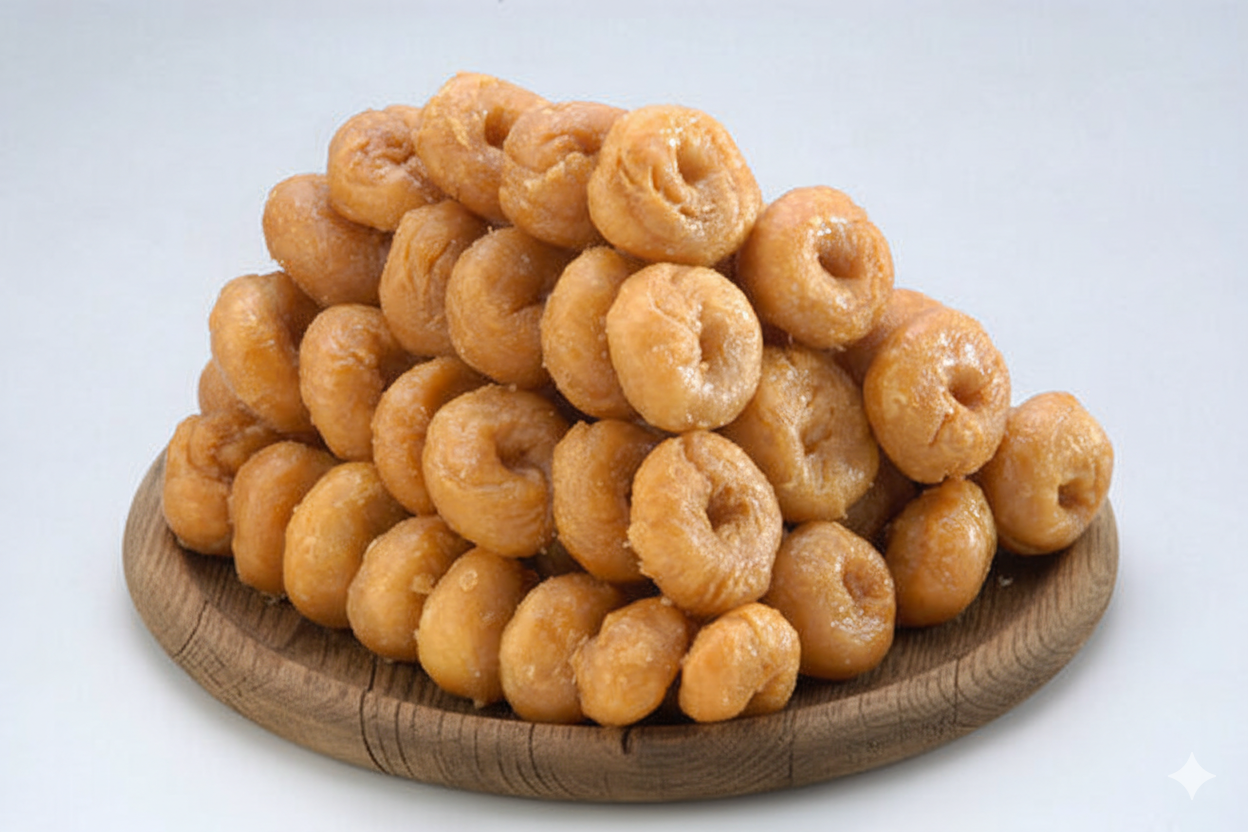
- Shape & Appearance: Badusha is flat and spherical, and concentric rings develop during frying, which get heightened as the pastry puffs up.
- Texture: The characteristic of an ideal badusha is its soft, layered, and flaky interior, which is obtained through thorough kneading and frying. The exterior is lightly crunchy.
- Flavor: Mild sweetness, with the richness of ghee (clarified butter) in the dough, and the aroma of cardamom or occasionally saffron in the syrup.
- Occasions: Generally served as a celebratory dessert and as a wedding dessert, badusha is also a favorite offering at religious rituals and usually presented as a gift.
Key Features
- Dough: Prepared using maida (all-purpose flour), ghee, a pinch of baking soda or baking powder, and curd (yogurt) to make them tender. The dough is kneaded stiff like shortcrust pastry.
- Frying: Formed into disks, the dough is deep-fried in ghee or oil at a moderate heat until golden and puffed.
- Sugar Syrup: Once fried, badushas are coated in hot, flavored sugar syrup (occasionally cardamom or saffron) that they soak in and become moistened and sweetened.
- Variations: Some varieties have a nut filling (e.g., cashews or almonds), or a cashew sprinkling on the top. North Indian versions may also be powdered with sugar instead of soaked in syrup and be made as a sweet known as balushahi.
- Storage: Fresh for 3–5 days at room temperature if stored in a sealed container.
Reviews
There are no reviews yet.